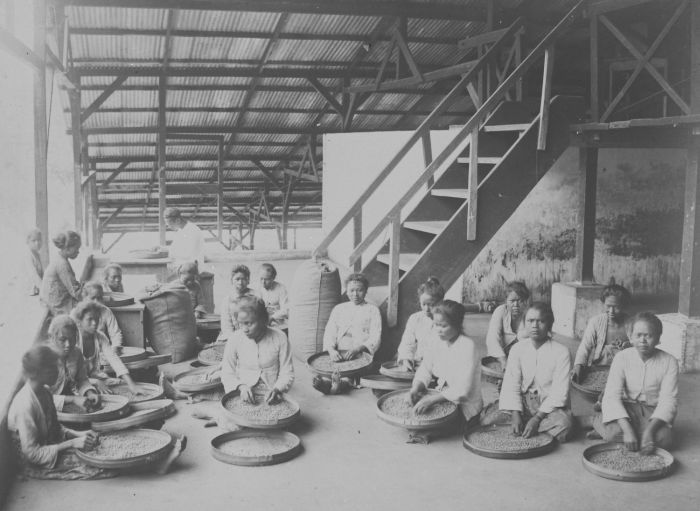
The history of coffee plantations in the Dutch East Indies (present-day Indonesia) is closely tied to the colonial economy. It is also linked with global trade. Here’s an overview based on historical records:
1. Introduction of Coffee to the Dutch East Indies
– Coffee was introduced to the Dutch East Indies by the Dutch in the late 17th century. The first coffee plants were brought from Yemen (Mocha) and planted in Java around 1696.
– The Dutch East India Company (VOC) saw coffee as a lucrative cash crop. They began cultivating it on a large scale.
2. Expansion of Coffee Plantations
– By the early 18th century, coffee cultivation expanded rapidly, particularly in Java, Sumatra, and Sulawesi. Java became the center of coffee production.
– The Dutch implemented a forced cultivation system known as the Cultuurstelsel (Cultivation System) in 1830. This system required local farmers to dedicate a portion of their land to cash crops. These crops included coffee, sugar, and indigo for export.
– Coffee became one of the most profitable exports for the Dutch colonial government.
3. Labor and Social Impact
– The cultivation system relied heavily on forced labor, leading to widespread exploitation and suffering among local populations.
– Farmers were often forced to neglect their own food crops, leading to famines and social unrest in some areas.
4. Coffee Varieties
– The most famous variety grown in the Dutch East Indies was Arabica coffee, particularly from Java. Yet, in the late 19th century, a coffee leaf rust disease devastated Arabica plantations. This devastation led to the introduction of Robusta coffee. Robusta was more resistant to the disease.
5. Global Trade and Influence
– Coffee from the Dutch East Indies became highly sought after in Europe and America. Java coffee, in particular, gained a reputation for its high quality.
– The term “java” became synonymous with coffee in many parts of the world.
6. Decline and Legacy
– The Cultivation System was abolished in the late 19th century, but coffee production continued under private enterprises.
– After Indonesia gained independence in 1945, coffee plantations were nationalized or taken over by local farmers.
– Today, Indonesia is a major coffee producer worldwide. It has a rich heritage of coffee cultivation dating back to the Dutch colonial era.
Preangerstelsel
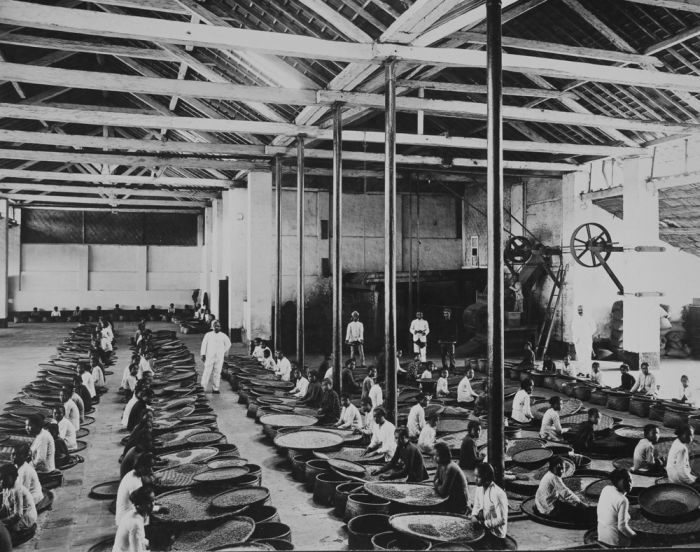
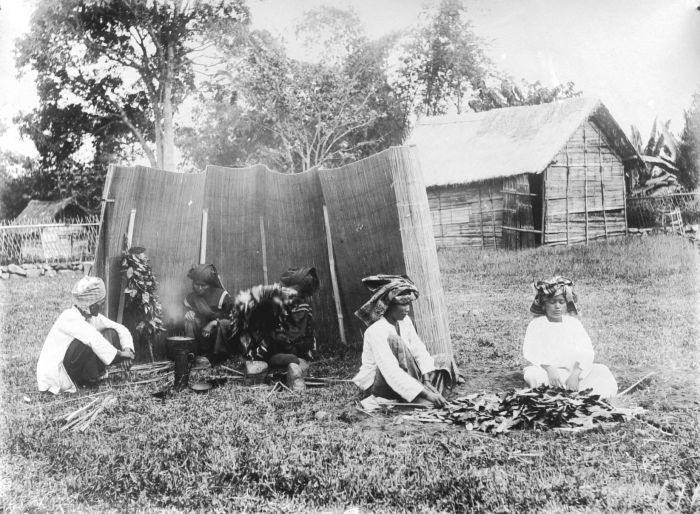
The Preangerstelsel (or Preanger System) was a colonial agricultural system. The Dutch implemented it in the Preanger Regency (now Priangan) region of West Java, Indonesia. This occurred during the 18th and 19th centuries. It came before the broader Cultuurstelsel (Cultivation System). The system focused specifically on producing coffee as a cash crop for export. Here’s an in-depth look at the Preangerstelsel:
1. Origins and Implementation
– The Preangerstelsel was introduced in the early 18th century, around 1720. The Dutch East India Company (VOC) implemented it to maximize coffee production in the fertile highlands of the Priangan region.
– The system required local Javanese farmers to grow coffee on their land. Farmers had to deliver a set amount of coffee beans to the Dutch authorities. This was a form of tax or tribute.
– The Priangan region had a high altitude and fertile volcanic soil. These conditions were ideal for coffee cultivation, particularly the Arabica variety.
2. Key Features of the System
– Forced Cultivation: Farmers were forced to use a part of their land for coffee production. This often occurred at the expense of food crops. They were also obliged to dedicate their labor to coffee.
– Quota System: Each village had to meet a specific quota of coffee beans. The Dutch colonial administration determined this quota. Failure to meet the quota often resulted in punishment.
– Role of Local Elites: The Dutch relied on local Javanese aristocrats. They also depended on village heads (known as regents or bupati) to enforce the process. These elites were given privileges and a share of the profits in exchange for their cooperation.
– Monopoly on Trade: The VOC controlled the buying and export of coffee. This monopoly ensured that all profits flowed back to the Dutch.
3. Impact on Local Communities
– Economic Exploitation: The Preangerstelsel placed a heavy burden on local farmers. They were often forced to neglect their own food crops. This was done to meet coffee quotas. This led to food shortages and economic hardship in some areas.
– Social Disruption: This disrupted traditional agricultural practices. It altered social structures. Farmers were forced to favor coffee over subsistence farming.
– Environmental Impact: The intensive cultivation of coffee caused deforestation in some parts of the Priangan region. It also led to soil degradation.
4. Connection to the Cultuurstelsel
– The Preangerstelsel served as a model for the broader Cultuurstelsel (Cultivation System). This system was implemented across Java in 1830 under Governor-General Johannes van den Bosch.
– The Cultuurstelsel expanded to include other cash crops like sugar, indigo, and tea. Despite this expansion, coffee remained a central part of the network, particularly in the Priangan region.
5. Decline and Legacy
– The Preangerstelsel began to decline in the mid-19th century as the Cultuurstelsel faced increasing criticism for its exploitative nature. Reports of widespread suffering and famine led to reforms and the eventual abolition of forced cultivation systems.
– Despite its negative impacts, the Preangerstelsel played a significant role in establishing Indonesia as a major coffee-producing region. The legacy of coffee cultivation in the Priangan region continues. Areas like Bandung and Garut stay important centers of coffee production.
6. Modern-Day Significance
– The history of the Preangerstelsel reminds us of the exploitative nature of colonial agricultural systems. These systems have had long-term effects on local communities and economies.
– Today, the Priangan region is known for its high-quality Arabica coffee. The historical roots of coffee cultivation in the area are celebrated as part of Indonesia’s rich cultural and agricultural heritage.
Pondok Kopi

Pondok Kopi in Batavia (modern-day Jakarta) plays a fascinating role in the history of coffee cultivation. It is part of the Dutch East Indies’ coffee growing heritage. Detailed historical records about Pondok Kopi specifically are scarce. Nonetheless, it is generally linked to the broader history of coffee plantations in the region during the Dutch colonial period. Here’s what is known:
1. Location and Context
– Pondok Kopi was located in the outskirts of Batavia, the capital of the Dutch East Indies. Batavia was the administrative and economic center of the colony. Its surrounding areas were utilized for agricultural production. This included coffee.
– The name “Pondok Kopi” suggests that it was a small settlement or plantation dedicated to coffee cultivation. It served as a local hub for processing and trading coffee beans.
2. Connection to Dutch Colonial Coffee Production
– The Dutch East Indies became a major global supplier of coffee during the 18th and 19th centuries. Regions like Java, Sumatra, and Sulawesi were particularly important. Batavia, as the colonial capital, played a key role in the export and trade of coffee.
– Pondok Kopi was part of the network of smaller plantations. These plantations supplied coffee to Batavia’s trading posts. The coffee would then be shipped to Europe and other markets.
3. Social and Economic Role
– Plantations like Pondok Kopi were often worked by local laborers or enslaved people under the Dutch colonial system. The labor conditions were harsh, and the profits primarily benefited the Dutch colonial administration and private landowners.
– The name “Pondok Kopi” also reflects the presence of small huts or shelters (pondok). These were places where workers lived. They were also where coffee was stored and processed.
4. Modern-Day Pondok Kopi
– Today, Pondok Kopi is a well-known suburban area in East Jakarta. It has grown into a residential and commercial district, far removed from its origins as a coffee plantation.
– The name serves as a reminder of the area’s historical ties to the coffee industry during the colonial era.
5. Legacy
– The story of Pondok Kopi is a microcosm of the larger history of coffee in Indonesia. It reflects the Dutch colonial exploitation of natural resources and labor, as well as the global demand for Indonesian coffee.
– The original plantation no longer exists. Still, the name “Pondok Kopi” endures. It serves as a testament to the region’s historical connection to coffee cultivation.
 Reelkopi Home
Leave a comment