The Colonial Plantation System of Java’s Onderneming
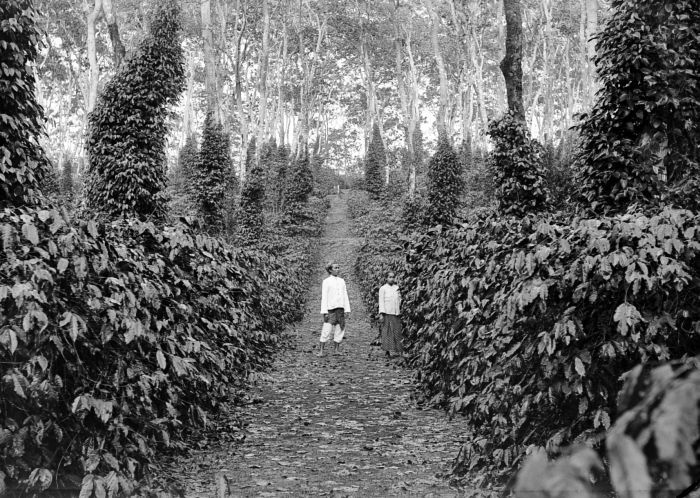
Beneath the canopy of the dadap tree, a complex agricultural world thrived. A historical photograph from the Tropenmuseum collection is titled “Java koffiestruiken onder dadap met peperranken op een onderneming.” It offers a window into the intricate and economically driven agroforestry systems of the Dutch East Indies. This image is more than just a snapshot. It encapsulates the essence of the colonial onderneming. This is a Dutch term for a private agricultural enterprise or plantation. Here, the cultivation of coffee, pepper, and other cash crops was meticulously engineered for profit.
The Onderneming: Engine of Colonial Exploitation
The term onderneming (plural: ondernemingen) was central to the Dutch colonial project in Java and beyond. After the abolition of the state-run Cultivation System (Cultuurstelsel), private capital began to dominate the agricultural landscape. These ondernemingen were large-scale plantations. They were often owned by European companies or individuals. These plantations employed wage labor, predominantly from the local Javanese population. This framework was often coercive and exploitative. The primary goal was not subsistence but the generation of wealth for the metropole through the export of tropical commodities. The photograph’s specific mention of “op een onderneming” firmly places this scene within this context of privately-owned, export-oriented agricultural enterprise.
The Dadap Tree: The Living Scaffold
A key feature of these plantations was the use of the dadap tree (Erythrina species). The description “onder dadap” (under dadap) highlighted this feature. This was not an accidental pairing but a calculated agricultural strategy. The dadap tree, a fast-growing nitrogen-fixing legume, served multiple critical functions:
- Shade Regulation: Coffee plants, especially the Coffea arabica variety prevalent in Java, thrive under partial shade. The broad leaves of the dadap tree created a protective canopy. They shielded the coffee from the intense tropical sun. This process helped to slow the maturation of the coffee berries. It is thought to improve their flavor profile.
- Soil Fertility: The dadap tree is a nitrogen-fixer. It converts atmospheric nitrogen into a form usable by other plants. This process naturally fertilizes the soil. It reduces the need for external inputs. Its leaf litter also provided organic mulch, improving soil structure and moisture retention.
- Support Structure: The sturdy and often thorny branches of the dadap tree provided a perfect living trellis for climbing plants. Most notably, it supported the pepper vines (peperranken) mentioned in the photograph’s title.
Pepper Vines and Coffee Shrubs: A Symphony of Cash Crops
The integration of pepper vines (Piper nigrum) with coffee shrubs exemplifies the intercropping practices common on these plantations. This multi-layered system, sometimes called “three-dimensional farming,” was designed to maximize the economic yield from a single plot of land:
- The Understory: The coffee shrubs formed the primary, low-growing crop layer.
- The Vertical Layer: The pepper vines were trained to climb the trunks and branches of the dadap trees. This arrangement allowed them to occupy a vertical space. Otherwise, that space would go unused.
- The Canopy: The dadap trees themselves formed the upper layer.
This system created a more resilient and biodiverse ecosystem than a monoculture plantation. It helped suppress weeds and reduced soil erosion. It also provided multiple revenue streams for the plantation owners. They cultivated both coveted “black gold” (pepper) and coffee for the burgeoning European market.
Labor and Landscape
While the agroforestry system was ecologically sophisticated, its operation was built on a foundation of intensive local labor. Javanese workers maintained the trees. They carefully harvested coffee cherries. They also tediously hand-picked pepper spikes. The idyllic scene captured in the photograph belies a harsher reality. This reality involves controlled land and directed labor. It also includes an economic structure designed to extract value for distant shareholders.
Conclusion: A Lasting Legacy
The legacy of the colonial onderneming is deeply etched into the Indonesian landscape and economy. The dadap tree is a common sight in coffee-growing regions. It serves as a testament to an effective, biologically intelligent practice. This practice outlived the colonial system that promoted it. The photograph from the Tropenmuseum, so, is a crucial historical document. It captures a moment. Botany, commerce, and colonial ambition intertwined during this moment. These elements created a shaded, productive, and profoundly managed landscape. This happened under the watchful eye of the onderneming. It is a silent witness to the complex history of Java’s land and people.
 Reelkopi Home
Leave a comment