The Unlikely Story of Coffee Creamer
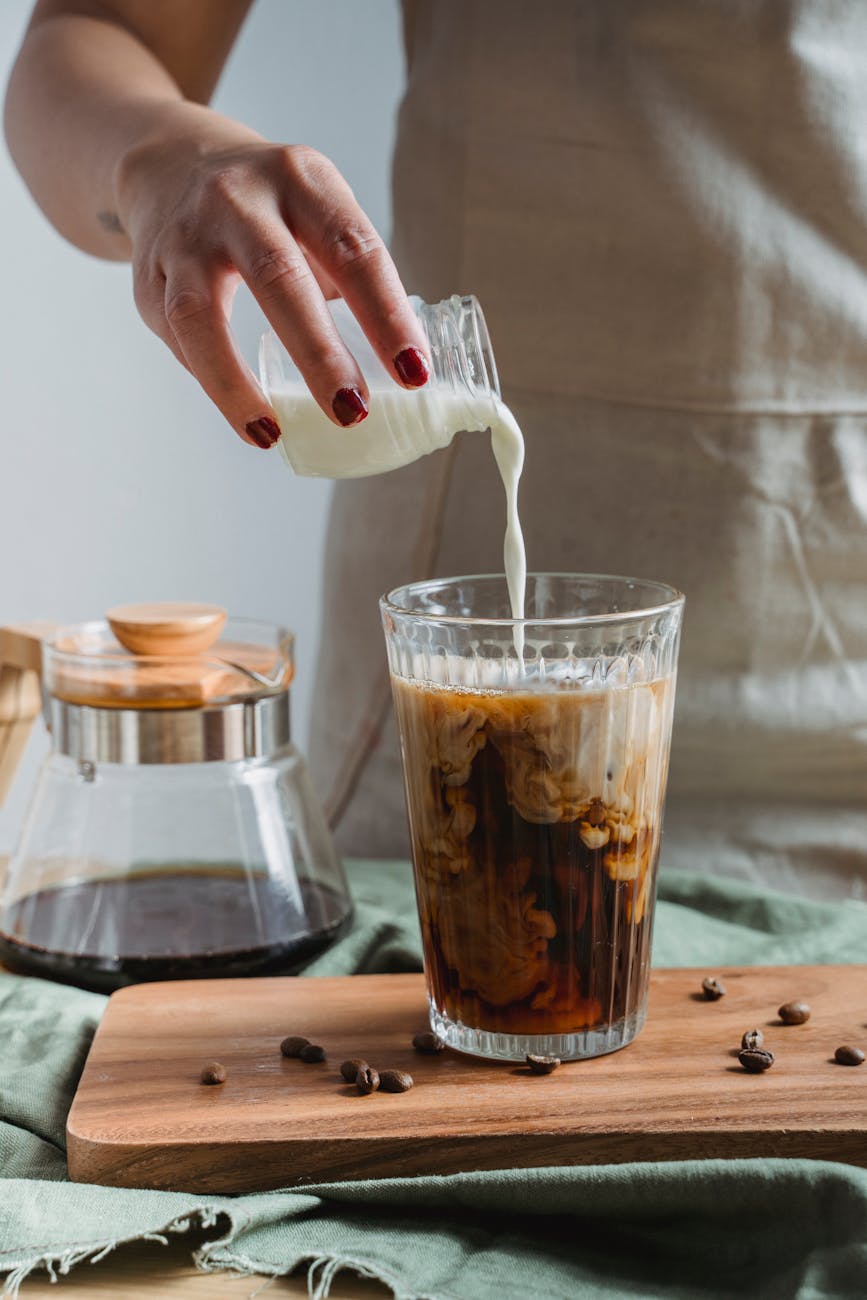
In the quiet rhythm of the modern morning, a familiar ritual plays out in millions of kitchens: coffee is poured, and a spoonful of a smooth, white liquid or a powder is stirred in, transforming the bitter brew into a creamy, sweetened comfort. This ubiquitous product—coffee creamer—has a history as rich and surprising as the flavors it now embodies, born not from culinary innovation but from wartime necessity.
The origin story of coffee creamer is intrinsically tied to a shortage. During the American Civil War, the Union faced a critical deficit of fresh milk. In response, Gail Borden, who had previously developed a method for condensing milk, created a shelf-stable, powdered milk product. While not an immediate sensation, this invention planted the seed for a non-perishable dairy alternative.
The true precursor to the modern coffee creamer emerged in the 20th century. In the 1940s, a chemist named Melvin C. Thurlow was working for the M & R Dietetic Laboratories in Columbus, Ohio. The company primarily produced baby formula. Thurlow’s task, however, was to find a profitable use for corn syrup solids, a byproduct of their process. His experimentation led to a non-dairy powder that, when mixed with water and oil, mimicked the consistency and whitening power of cream. Marketed initially as a product for lactose-intolerant individuals, it found its true calling when a restaurant owner discovered its practical advantages: it didn’t spoil on the counter and was cheaper than dairy.
The pivotal moment for brand recognition came in 1961 with the launch of Carnation Coffee-Mate by the Carnation Company. Its ingenious marketing slogan, “For Coffee Richness Without Cream,” spoke directly to the postwar American housewife, promising convenience, economy, and consistency. No more curdling, no more rushing to use up cream before it soured. Coffee-Mate, first as a powder and later as a liquid, became an emblem of mid-century modernity.
The 1970s and 80s saw the creamer market explode with innovation and diversification. The driving force was the shift from utility to indulgence. Flavored creamers debuted, with French Vanilla and Irish Cream leading a revolution. Coffee was no longer just a caffeine delivery system; it was a customizable dessert-like experience. The liquid form, often made with hydrogenated oils for shelf stability, became dominant in refrigerated aisles, offering a richer mouthfeel.
The turn of the 21st century brought new waves of change, reflecting broader consumer trends:
- The Health Critique: The prevalence of trans fats (from hydrogenated oils) and high sugar content placed creamer in the crosshairs of health advocates.
- The Reformulation Wave: In response, major brands aggressively reformulated, removing trans fats and launching sugar-free, fat-free, and reduced-calorie lines.
- The Specialization Era: The market fragmented to cater to every dietary preference: plant-based creamers (almond, oat, coconut, soy) surged in popularity, alongside organic, non-GMO, and keto-friendly options.
Today, the coffee creamer aisle is a kaleidoscope of choice. What began as a simple whitening powder is now a multi-billion dollar global industry featuring liquid, powder, and even ultra-concentrated “shots.” Flavors range from classic vanilla to seasonal spectacles like Pumpkin Spice or Peppermint Mocha, driving both sales and social media buzz. It has transcended its original purpose, becoming a key ingredient in home baking and a cultural signifier of personal taste.
From a solution for spoiled cream to a vehicle for salted caramel flavor, the journey of coffee creamer is a uniquely American tale of ingenuity, marketing, and adaptation. It mirrors our evolving relationship with food—from valuing pure convenience to seeking conscious indulgence. It proves that sometimes, the most enduring inventions are not those that solve a grand problem, but those that subtly, and sweetly, transform our daily rituals. ☕️
 Reelkopi Home
Leave a comment